
Our doctoral statement at City Church Seven Hills starts broad and gradually narrows down to our unique distinctives. So our first two posts will deal with some of the most general beliefs that define what it means to be Christian:
1. The Trinity
2. The life, death, burial, and resurrection of Jesus.
These doctrines and theologies lay out the bare minimum of what it means to be part of the Christian faith and are found in our statement of faith under the heading, “We Are Christian.”
Let’s begin with the Trinity. The doctrine of the Trinity is one that must be carefully developed through a holistic reading of the Scripture. There is not one verse to point to. In fact, the word Trinity does not appear in the Bible. Rather, it is a concept that the Church has distilled from the teachings of the Bible as the best way to understand the nature of God. While it may not be explicitly spelled out, the understanding of God as three distinct persons, Father, Son, and Holy Spirit is essential to our faith. It is a way to explain the mystery of how Jesus can be fully God and fully man, while still interacting with another divine person, who he calls Father, and promising to send yet another divine person, who he calls Helper. We see these three separate persons referred to in 2 Corinthians 13:13 where Paul prays, “The grace of the Lord Jesus Christ, and the love of God, and the fellowship of the Holy Spirit be with all of you.”
This reality of three distinct persons must be balanced with the clear understanding that God is one. We worship one God, not three gods. This has been foundational since the beginning of God’s revelation to man as He said in Deuteronomy 6:4, “Listen, Israel: The Lord our God, the Lord is One.” The oneness of God cannot be denied by a orthodox follower of Christianity. Yet, Jesus made clear distinctions between Himself, God the Father, and the Holy Spirit, most famously in Matthew 28:19-20.
“Go, therefore, and make disciples of all nations, baptizing them in the name of the Father and of the Son and of the Holy Spirit, teaching them to observe everything I have commanded you. And remember, I am with you always, to the end of the age.”
All three persons of the Trinity found in some of Jesus’ most important words to His church. Jesus also pointed back to Deuteronomy 6 when asked which commandment was the greatest. So He was certainly not dismissive of the oneness of God. How do we understand all of this?
I won’t presume to present a full defense of the Trinity here. But I would like to lay out some basic Scriptures that you can hold on to and perhaps explore further yourself. You can use these as as foundation for your own understanding of the Trinity and an assurance that the doctrine is rooted in the Bible.
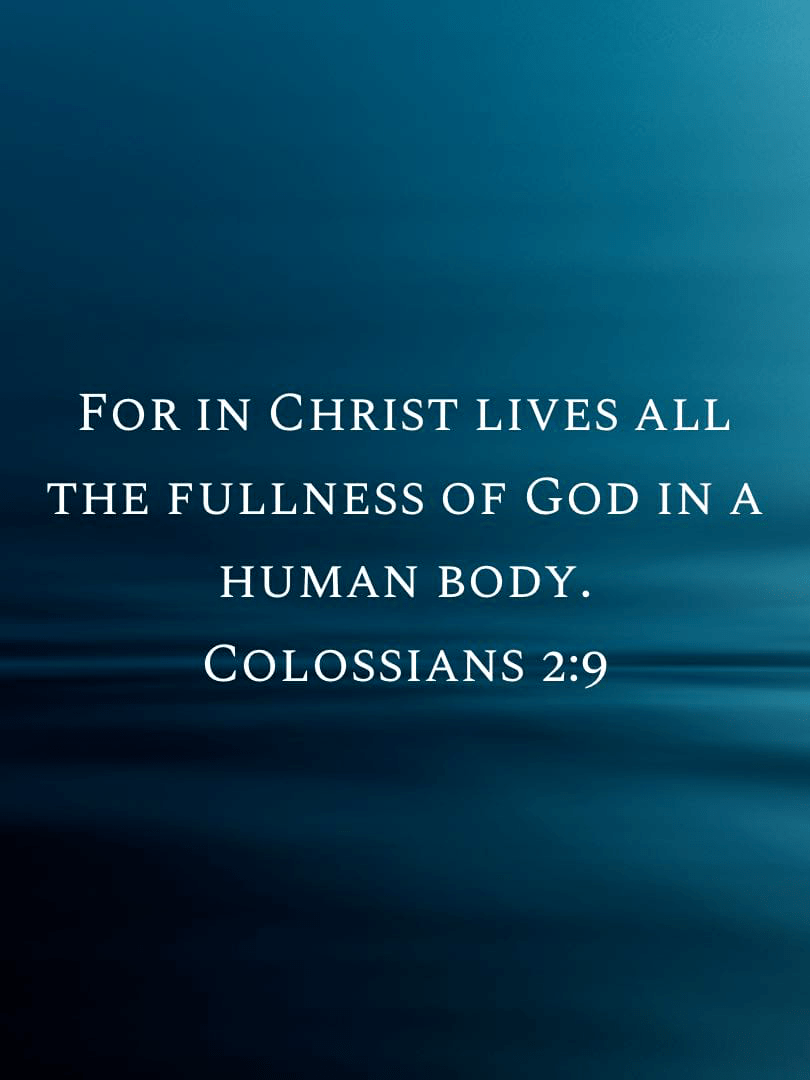
Let’s begin with the unity of Father and Son. Paul says in Colossians 2:9 that “in Christ lives all the fullness of God in a human body.” Everything that God the Father is can be found in Jesus. Earlier in the same letter, in chapter 1 verse 15, this same idea is developed in more detail. Jesus “is the visible image of the invisible God,” so that when we look at Jesus, we can see God. Jesus is the perfect representative of God, sent to earth to show us what God is like.
One, yet separate.
It is perhaps easier to conceive of how Holy Spirit is one with Father and Son. The spirit of any being is the core of who they are, their essence. So when Jesus speaks of sending His Spirit to help us in John 16:5-15 it makes sense that in His physical absence, He will maintain a spiritual presence. The passage in John 16 is very helpful for showing that the Spirit is distinct and must be sent, yet acts in perfect unity with both Father and Son.
There is much that is mysterious about the nature of God. The doctrine of the Trinity is an attempt to explain some of these mysteries but leaves many questions unanswered. It is our prayer that you embrace the oneness of God and the distinction between three persons while not insisting on knowing all the answers. Live in the tension of the mystery while accepting the truth that has been revealed.
 City Church Seven Hills
Leave a comment